Case study: Grailed
- Project: Design initiative(s) that enable fashion sellers to easily add detailed measurements to their product listings thereby increasing the buyers’ trust.
- Role: Lead Product Designer, AR Subject Matter Expert (SME)
- Team: 1 Product Manager, 2 UX Designers, 1 iOS Developer, and 1 Data Scientist
- Contributions: Hands-on tasks included research lead – user interviews, usability testing, creation of proto-personas, generation of user flows, prototyping
- Tools: Sketching, Whimsical, Figma, prototyping
Who is Grailed?
Grailed is a curated and two-sided e-commerce marketplace for men’s clothing. Their mission is to create a community-driven marketplace that is built for enthusiasts by enthusiasts. Grailed’s goal is to provide an interactive and educational meeting ground where fashion enthusiasts can buy and sell their unique pieces.

Project overview
As of Feb 2019, Grailed had 3.7 million registered users creating over 50k new listings per day.
In Q1-2019 Grailed’s company-wide OKRs were focused on Trust and Fraud prevention.
After initial user research and analysis, we saw Trust, Value & Comfort ratings at a low 32% – an extract from SUPR-Q (Standardized User Experience Percentile Rank Questionnaire) by ~300 active buyers.
The design team saw an opportunity to create a product feature that would assess multiple user pain points:
- establish buyer trust by removing friction in the transaction process
- investigate reasons for the low trust ranking
- analyze the impact of trust on conversions (defined as completed purchase)
Discovery: what we did
- Data analysis of website and app with data scientist (Amplitude/Mixpanel)
- Reviews performed by us in collaboration with social outreach and customer service teams:
- customer support tickets
- app reviews
- social media comments
- Conducted user interviews with 15 participants (sourced by the customer service team):
- active buyers/active sellers
- used the app/website at least 4 times a week
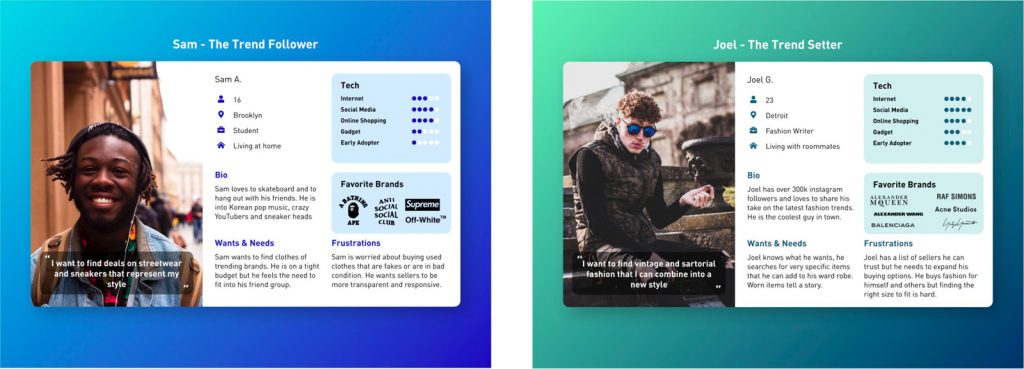
- Created proto-personas based on:
- user interviews
- research findings
- feedback from the marketing/sales team
User problems
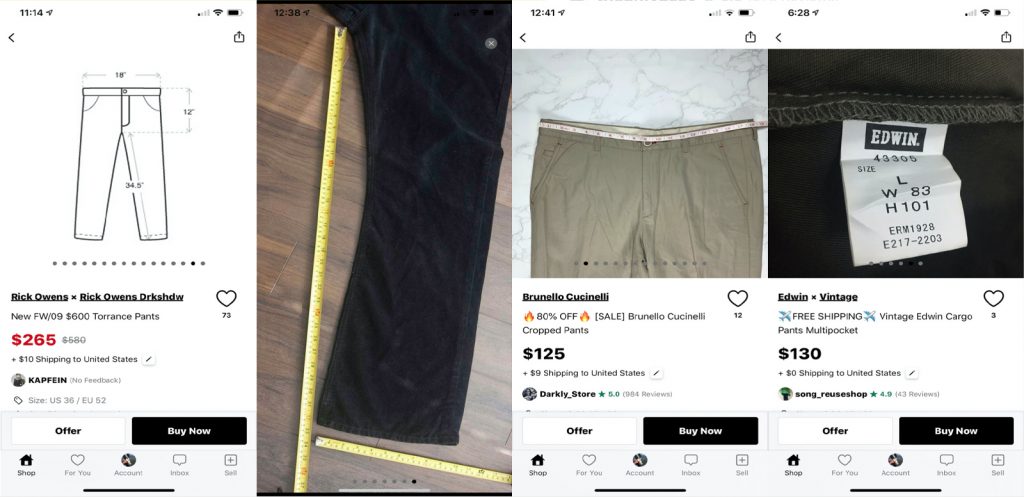
Buyers don’t know if a listed product is fitting them because measurements are missing or inaccurate. Brand label sizing varies based on release year and season.
Garment size changes based on the individual fabric treatment.
Buyers don’t know if a listing is legitimate or a fake. Fraud cases happen often, even though Grailed has initiatives to prevent and/or resolve them.
Sellers upload their listings via desktop (41%) and mobile (59%).
Power sellers (500+ transactions) use studio photography and bulk upload via desktop (79%).
65% of all sellers respond reactively to product size inquiries.
There is no convenient way to add detailed measurements to a listing.
Measurement across the platform is inconsistent.
Standard tailor measurements are not common knowledge among all us
Business goals
- Increase buyer trust in seller listings
- Increase purchases by reducing redundant buyer inquiries
- Increase data accuracy with standardized clothes measurements
Scope and prioritization
The stakeholders and the design team decided on a “soft launch” of the feature.
After approval, we set up the project for:
- rapid iteration
- max time frame: 2 sprint cycles (1 month)
- two rounds of user testing pre-launch
- low risk
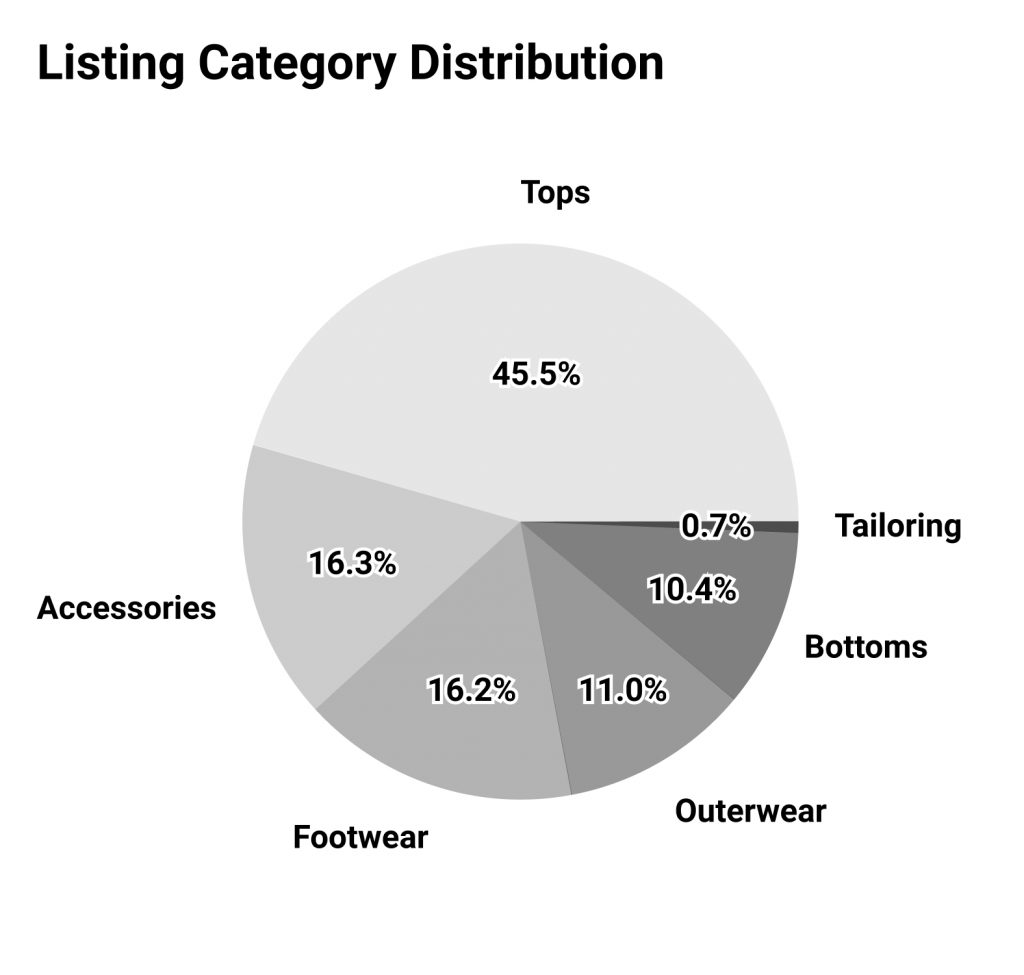
- adding the feature only to the “bottoms” category (10.4% of all listings)
- only one dev can work on it part-time
- “experimental”
- release as a beta to 0.025% of active seller accounts (random selection of ~100000 users)
- launch on iOS devices (ARKit 2)
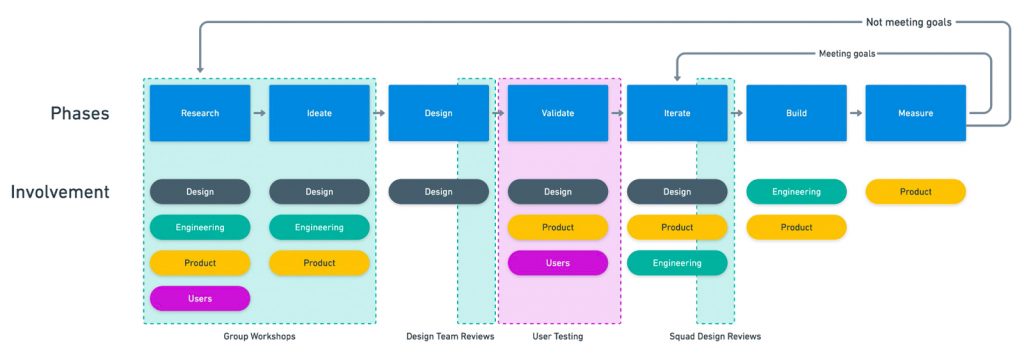
Design process
Creating a design production pipeline aligned with the schedule of the agile development backlog.
Defining group exercises, regular user testing sessions, and touchpoints with stakeholders.
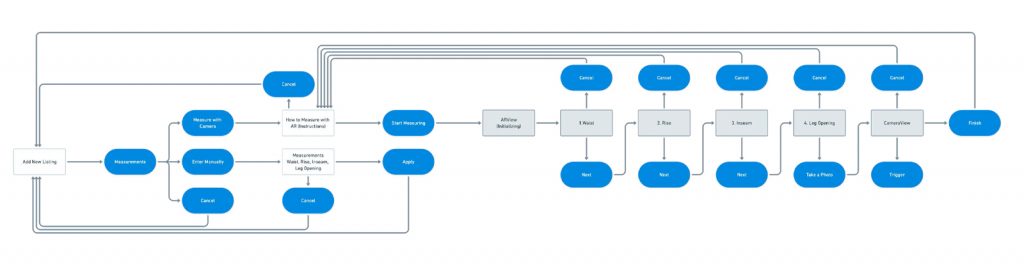
User flow
- guides the user through a complete measurement
- features standard tailor measurement as a baseline for accuracy and user education
- offers manual entry option as a fallback
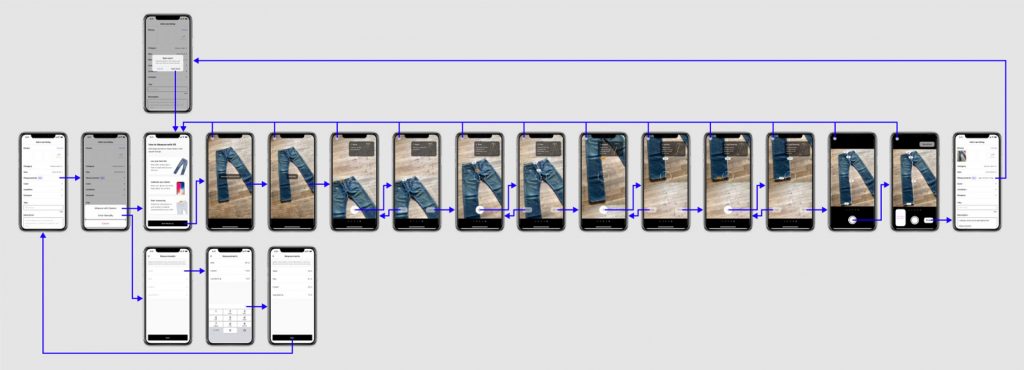
Wireframes (Figma prototype)
- built using the components of the pattern library
- tested on mobile devices as proof of concept
AR Measuring usability test v1
Purpose
- Validation of
● minimal user interface design
● screenflow - Analysis of user interaction with AR technology.
Testing Details
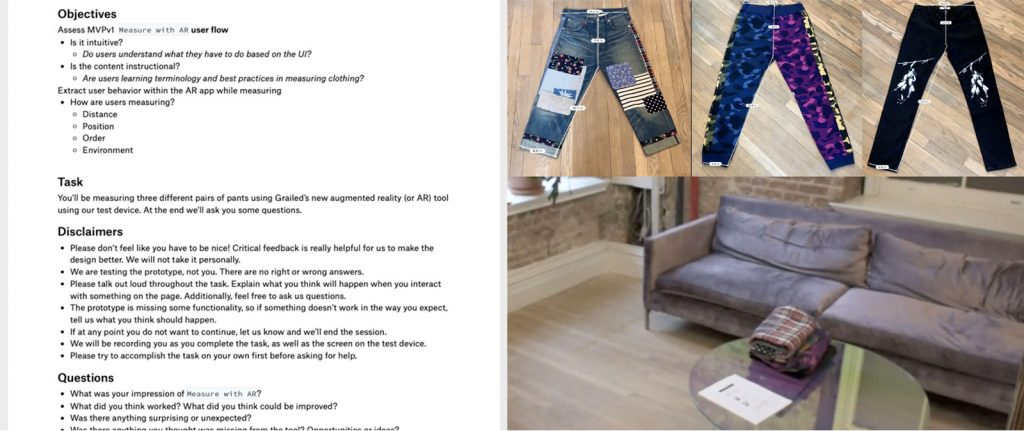
● 5 on-site testers
● internal test with employees
● 3 men (ages 18 – 24), 2 women (ages 20, 26)
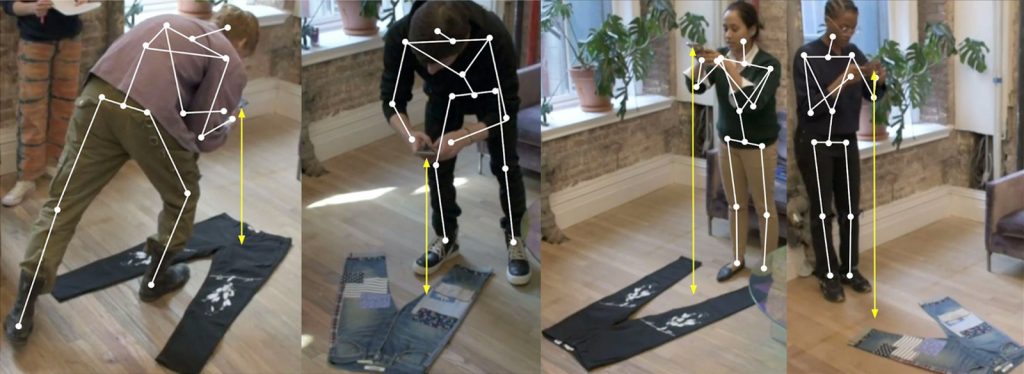
The research setup
- Each participant was tasked to measure three pairs of pants with the app
- The pants were folded on a table to prevent individual measurement bias
- The instructions were printed out and had to be read before interacting with the app
- The participants were asked to reiterate the names of the measurements they took
- We finished with a few follow-up questions
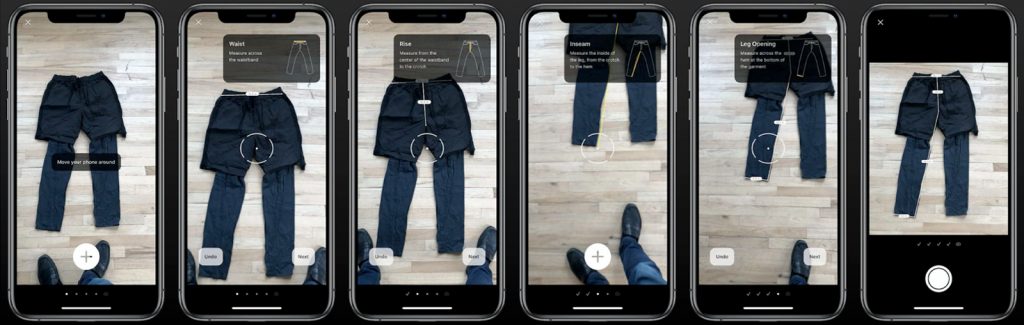
Prototype v1
- minimal interface maximizing the camera view
- on-screen instructions followed by “user-driven” interaction
AR Measuring usability test v2
Purpose
- Validation of
● user interface design updates
● hypothesis: on-screen instructions guide effortless and accurate measurements - Analysis of user interaction with AR technology.
Testing Details
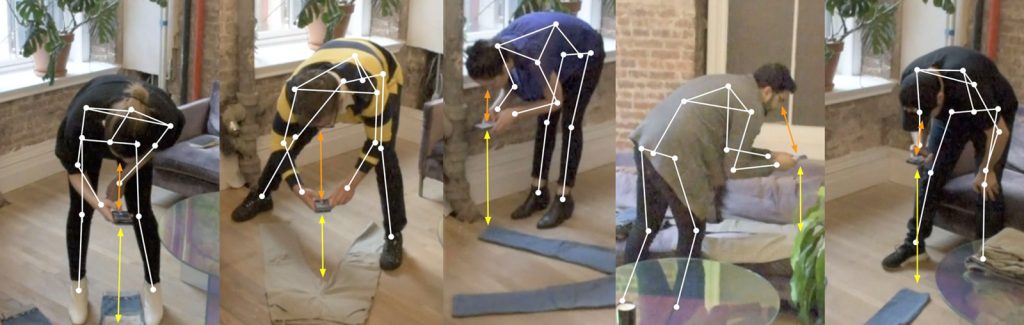
● 6 on-site testers
● recruited through the customer service team
● 4 men (ages 22-32), 2 women (ages 25, 29)
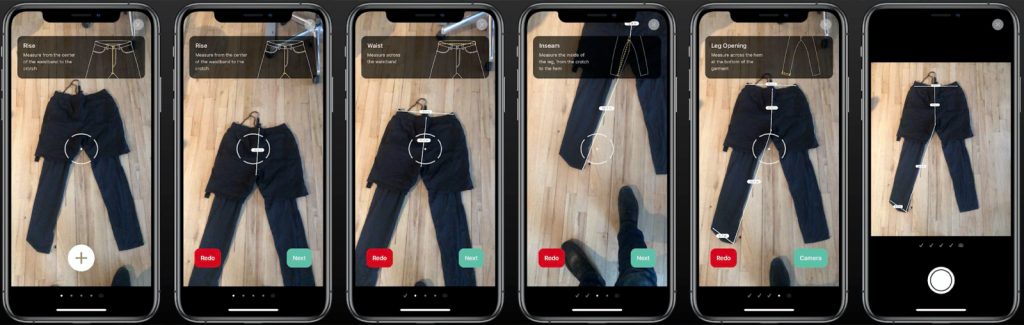
Prototype v2
Optimization of
- illustration size
- label readability
- interface readability and guidance
Post-launch tracking & data analysis
Collection of one-month observation data.
- If the initiative shows
- a Trust, Value & Comfort ratings increase to +50% based on SUPR-Q
and/or - an increase in conversions by +0.25%
- a Trust, Value & Comfort ratings increase to +50% based on SUPR-Q
- Then we plan
- a rollout into the official app, all users get access
- an iteration of the current version with another usability test
- the addition of other categories
- the implementation of release versioning into the product roadmap
- Else we abandon this initiative and launch the next one on our list
Results
Our user tests validated that including size measurement data on the image and in the listing description increased user trust in both the sellers and the items themselves.
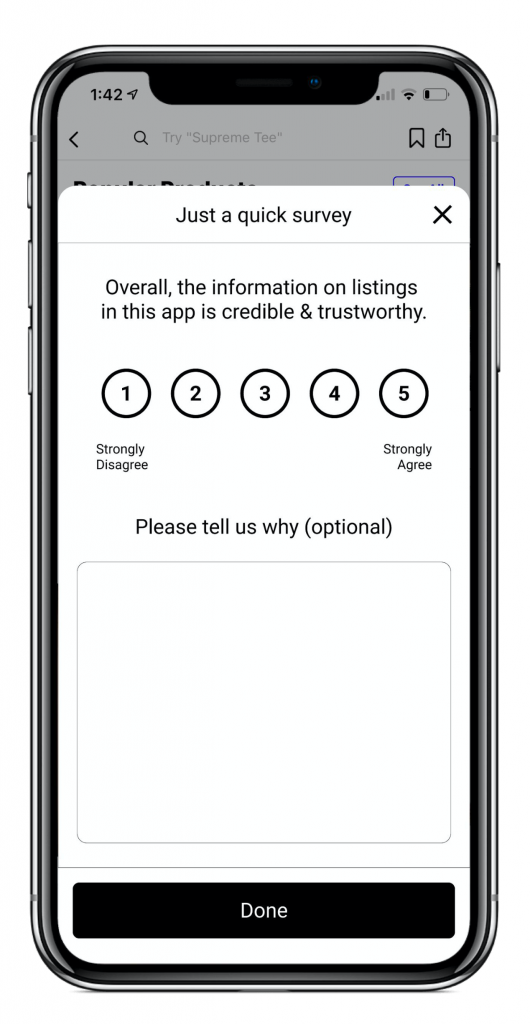
We triggered an in-app survey focusing on Credibility (Trust, Value & Comfort) on 300 user devices after visits of AR measurement listings. We received 122 responses with a rating average of 3.8, which in SUPR-Q terms translates to a 76% Trust rating. (up from 32% originally)
Additionally, we observed a significant increase in user engagement amongst sellers that adopted the new AR Measurement feature.
Unfortunately, due to the technological limitations of the AR feature itself, further development and research efforts were on hold.
Retrospective
Even though Apple introduced its AR Measure App preinstalled with iOS 12 as usable tool, ARKit 2 plane detection accuracy was not production ready in April 2019.
The measurement discrepancy in our user testing was too significant for more than a beta launch.
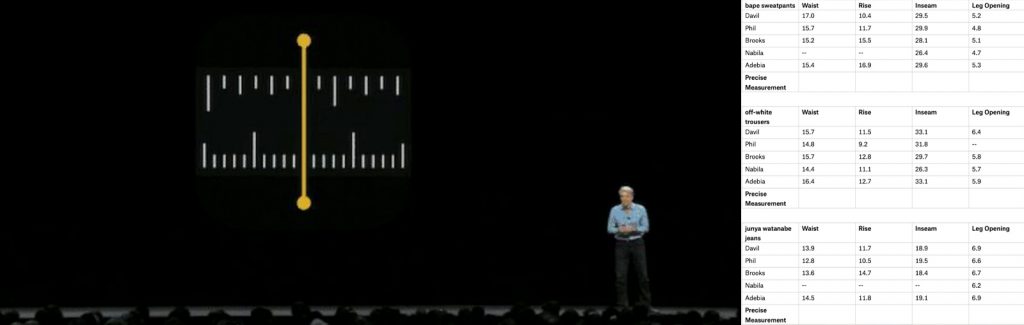
Only after ARKit 3 was rolled out in September 2019, the AR measurement feature was accurate enough for a full release.
Delivery:
The feature is live today and is being actively used by sellers. Considering the leap in technology, trust in the design team by the stakeholders, and the limited resources/efforts spent, the project was a success.